What is an AI Agent
What Is an AI Agent? A Simple Guide for Businesses
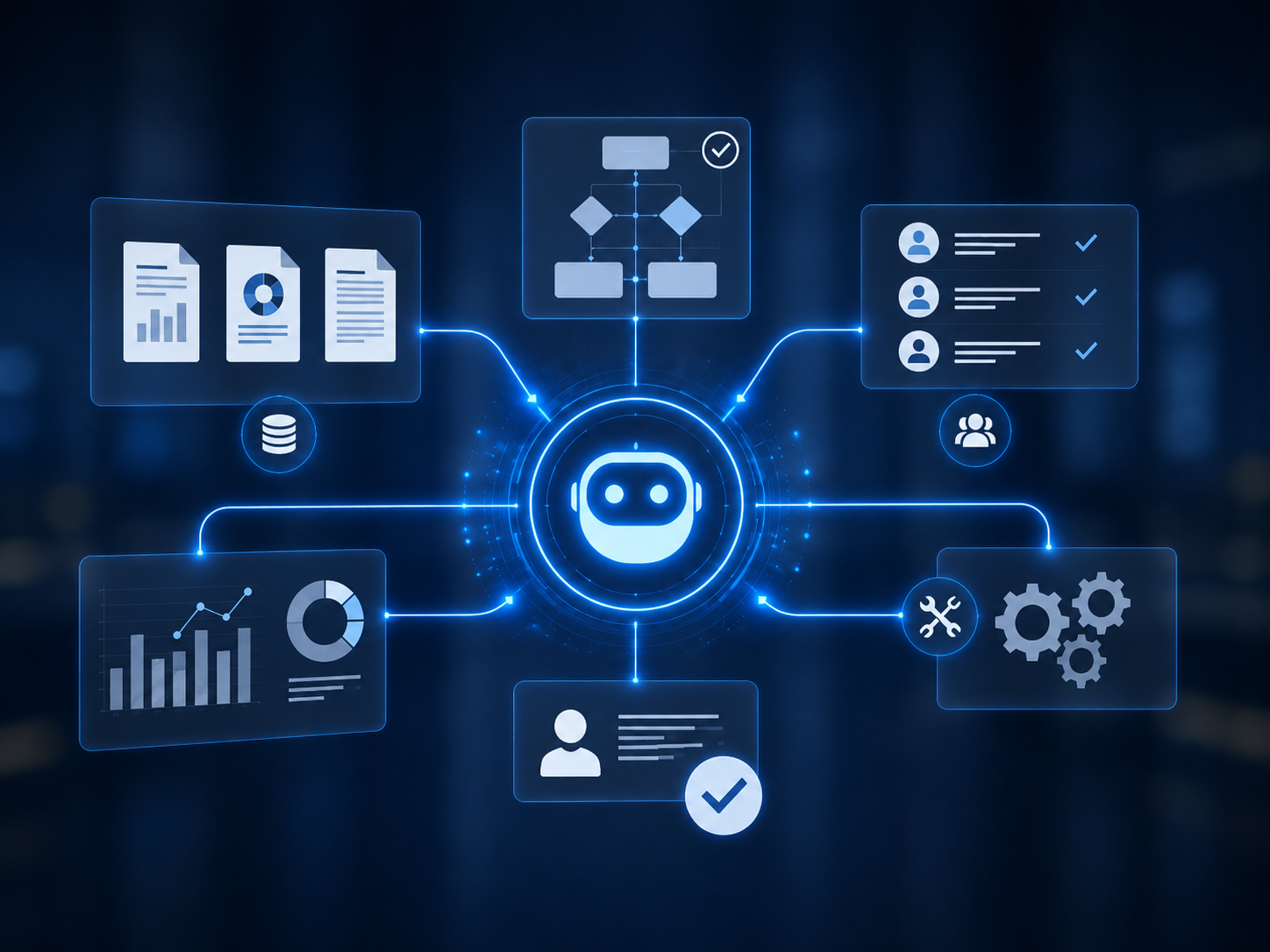
AI agents are changing how businesses use automation. Unlike a basic chatbot, an AI agent can work toward a goal, use information, follow steps and support real workflow tasks.
For businesses dealing with reports, documents, admin, client enquiries or technical processes, AI agents can help reduce manual effort and improve consistency.
This guide explains what AI agents are, how they work, and where businesses can start using them safely.
AI Agents vs Chatbots: What Is the Difference?
AI Agents vs Chatbots: What Is the Difference?
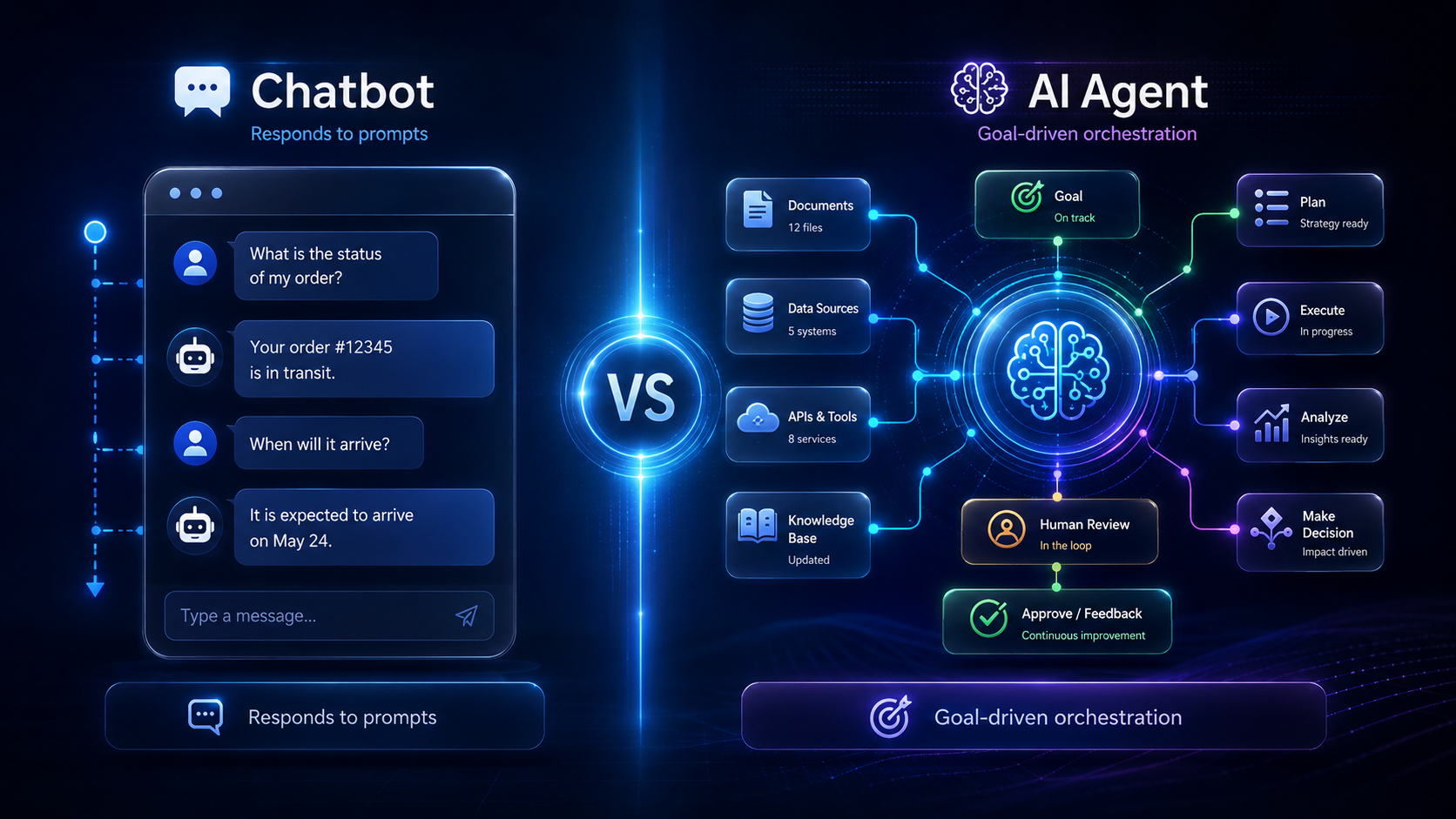
AI agents and chatbots are often confused, but they are not the same. A chatbot usually responds to questions, while an AI agent can work toward a goal, use tools, follow steps and support a business workflow.
For businesses, this difference matters. A chatbot may help answer customer questions or summarise information, but an AI agent can help with tasks such as document search, reporting, workflow triage, data handling and human-reviewed automation.
This guide explains the difference between AI agents and chatbots, where each one is useful, and how businesses can decide which type of AI system fits their workflow.
AI Agents vs Automation: What Businesses Need to Know
AI Agents vs Automation: What Businesses Need to Know
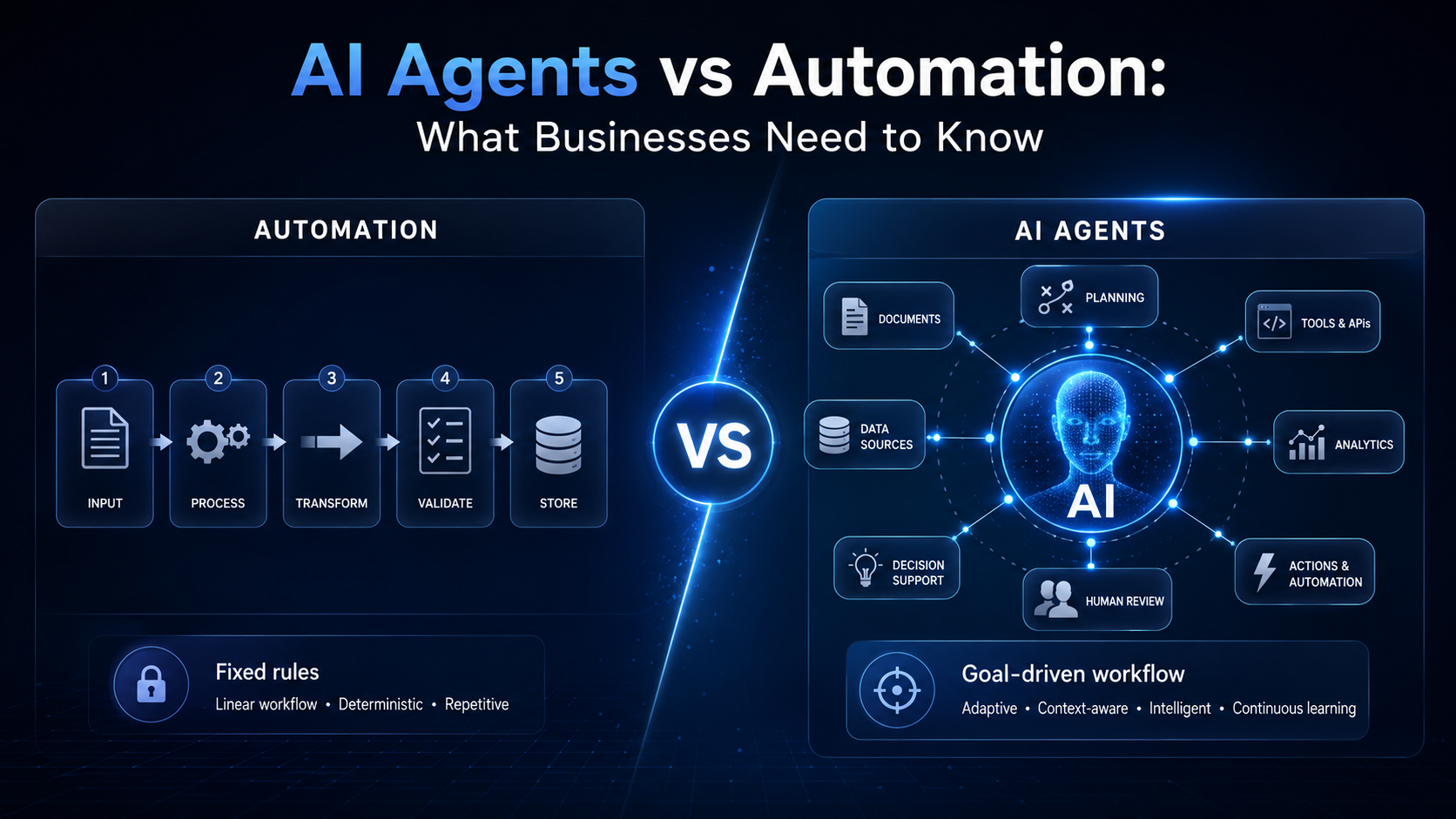
AI agents and traditional automation can both reduce manual work, but they operate in different ways. Traditional automation follows fixed rules, while AI agents can interpret information, work toward a goal and support more flexible business workflows.
For businesses, this difference is important. Automation is useful for repeatable tasks with clear steps, while AI agents are better suited to tasks involving documents, decisions, reporting, triage, summaries and changing information.
This guide explains the difference between AI agents and traditional automation, where each one works best, and how businesses can choose the right approach for their workflow.
How AI Agents Work: Goals, Tools, Data and Human Review
How AI Agents Work: Goals, Tools, Data and Human Review
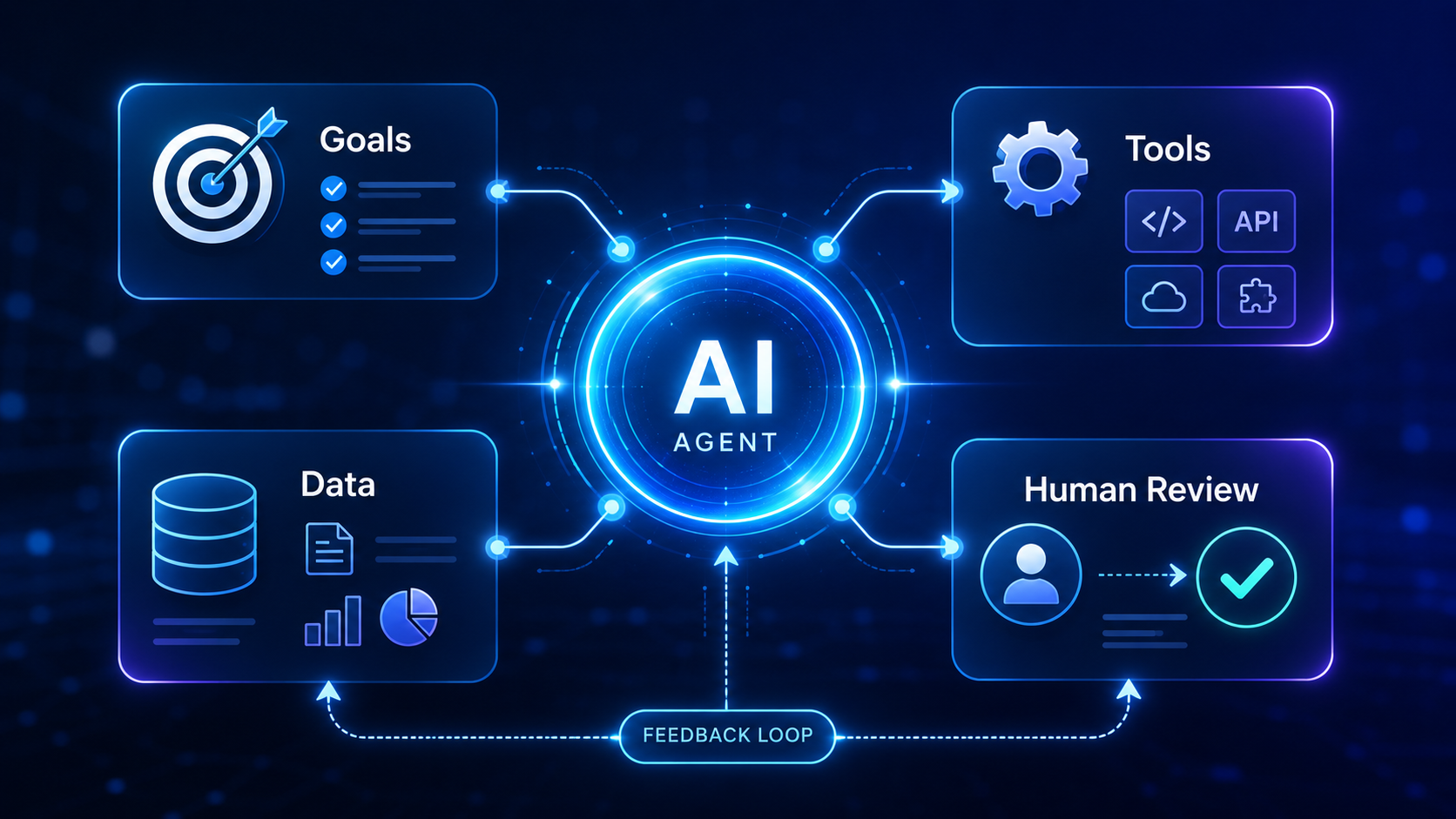
AI agents do not work by mysteriously. A useful AI agent needs a clear goal, access to the right information, the ability to use tools, and rules that define what it can and cannot do.
For businesses, this matters because an AI agent is only as useful as the workflow behind it. The best systems are designed around real tasks such as document search, reporting, workflow triage, data handling and human-reviewed decision support.
This guide explains the core parts of an AI agent, including goals, tools, data access, workflow steps and human review, so businesses can understand how AI agents work before using them.
What Is the “Brain” in an AI Agent?
What Is the “Brain” in an AI Agent?
The “brain” of an AI agent is not just the AI model. It is the combination of instructions, goals, data access, tools, memory, workflow rules and human approval points that allow the agent to support real business tasks.
For businesses, this is important because a useful AI agent needs more than a chatbot interface. It needs to understand the task, access the right information, follow the correct process and know when to stop for human review.
This guide explains what makes up the “brain” of an AI agent, how the different parts work together, and why good design matters when using AI agents for business automation.

Are AI Agents Safe for Business Use?
Are AI Agents Safe for Business Use?
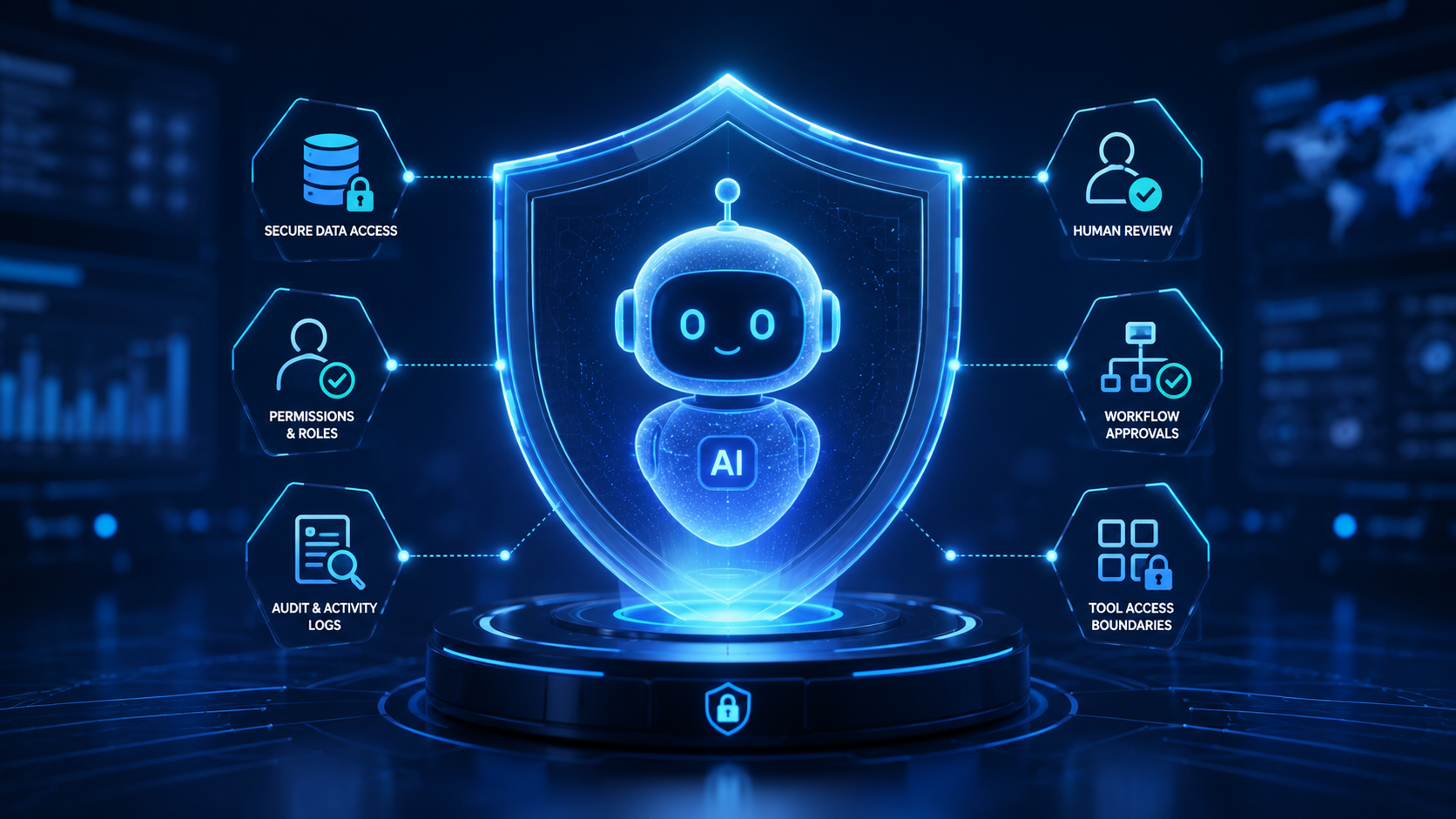
AI agents can be safe for business use when they are designed with the right controls, permissions and human review steps. The risk is not the idea of using AI agents — the risk is allowing them to access data or take action without clear boundaries.
For businesses, safe AI agent design means controlling what information the agent can use, what tools it can access, what actions it can perform, and when a human must review the output before anything is finalised.
This guide explains the main safety risks of AI agents, how businesses can reduce those risks, and how to use AI agents responsibly for document search, reporting, workflow support and automation.