
UAV Mission Trajectory Simulation
SoliosAI supports engineering teams with UAV mission trajectory simulation, trajectory assessment, waypoint behaviour analysis, and performance evidence for autonomous aerial systems operating in complex environments.
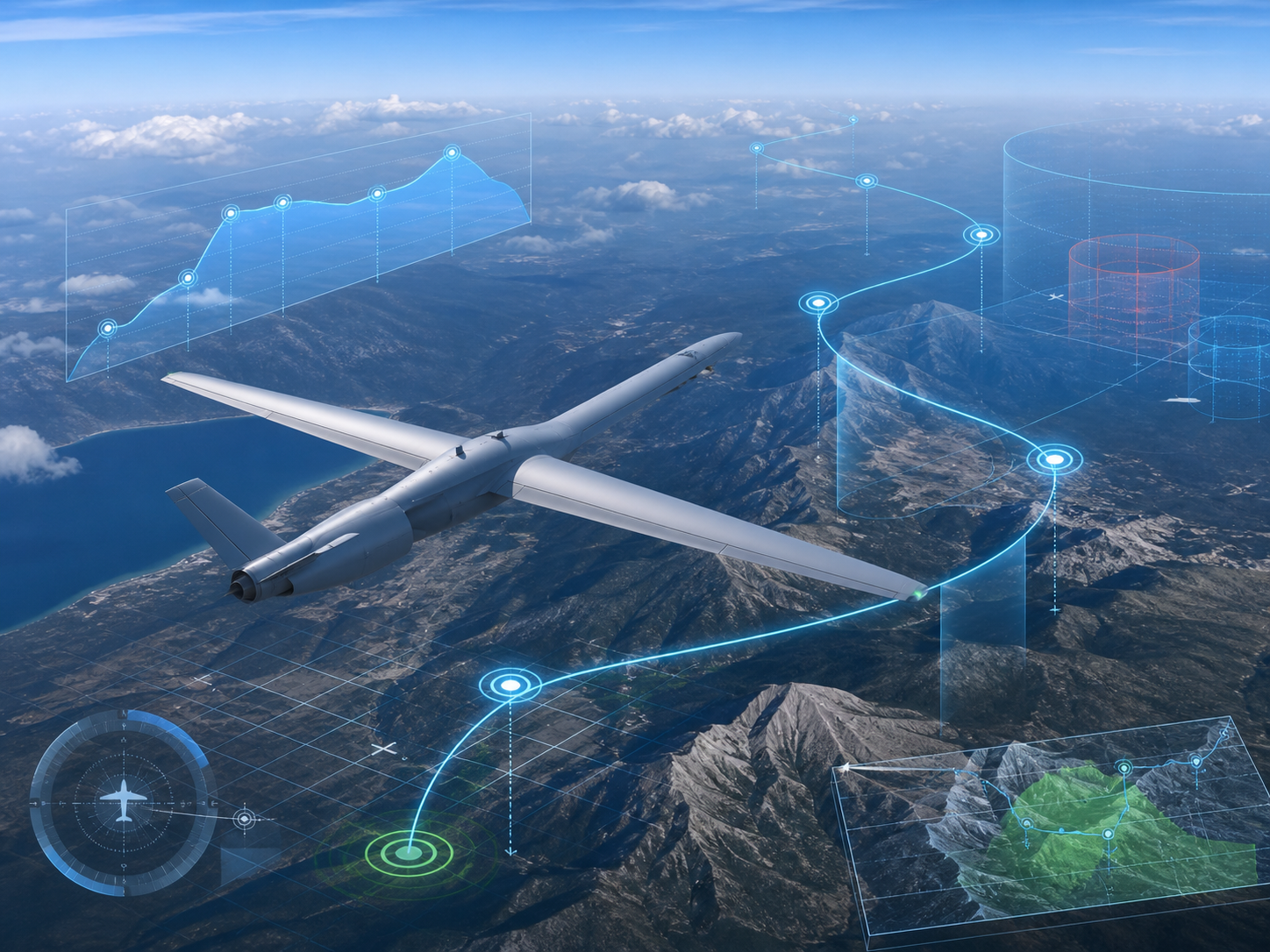
UAV mission trajectory simulation helps engineering teams assess how an autonomous aerial system may behave before operational risk appears. SoliosAI can support mission path review, waypoint tracking, turn behaviour, altitude control, corridor compliance, wind and gust response, degraded-condition testing, and mission scenario assessment. The goal is to create clearer technical evidence for design reviews, feasibility discussions, risk assessment, and next-step engineering decisions.
Assess Mission Behaviour Before Operational Risk Appears
UAV missions can appear successful at a high level while still hiding issues in path tracking, turn behaviour, altitude control, wind response, corridor compliance, or sensor-driven navigation. SoliosAI helps teams explore these behaviours through UAV mission trajectory simulation so technical weaknesses can be identified earlier and presented as clear engineering evidence.
Useful for:
- Wind, gust, and degraded-condition testing
- Mission feasibility checks
- Path-following and waypoint behaviour
- Turn radius, altitude, and corridor compliance
- and more
What This Capability Supports
Trajectory Modelling
Model planned and flown paths, waypoint transitions, loiter patterns, turns, climbs, descents, and mission route behaviour.
Waypoint & Corridor Assessment
Assess waypoint tracking, turn radius behaviour, overshoot, corridor compliance, altitude deviation, and mission boundary performance.
Environmental Scenario Testing
Explore the effect of wind, gusts, density altitude, degraded sensor quality, and operating-condition uncertainty.
Mission Evidence & Reporting
Generate plots, metrics, visual outputs, and technical summaries suitable for design reviews, internal assessment, and client-facing reports.
Example Assessment Scenarios
SoliosAI can support UAV trajectory and mission assessment across scenarios such as:
- Waypoint tracking and path-following analysis
- Turn radius and loiter behaviour assessment
- Altitude profile and climb/descent performance checks
- Wind and gust response simulation
- Mission corridor compliance testing
- Search pattern or reconnaissance route assessment
- Sensor degradation and navigation uncertainty scenarios
- Replay-style analysis of mission behaviour and deviations
Depending on the project scope, outputs may include:
- Trajectory plots and mission path visualisations
- Waypoint error and cross-track deviation metrics
- Altitude, speed, turn, and corridor compliance summaries
- Wind and gust response simulation
- Scenario comparison reports
- Risk-focused findings and technical recommendations
- Simulation evidence suitable for design review discussions
Useful Reference Areas
Useful Reference Areas
Teams working on UAV mission trajectory simulation, autonomous aerial systems, and technical assurance may also find it useful to review broader aviation, autonomy, and AI risk guidance when planning simulation evidence and system assessment workflows. Levels of autonomy for non-holomonic vehicles.
Explore SoliosAI
Explore related SoliosAI capabilities including GNSS-denied and EW resilience testing, Kalman filter and sensor fusion diagnostics, and verification and validation support.
Who This Is For
This capability is suitable for engineering teams, autonomy developers, UAV integrators, robotics teams, mining technology groups, research organisations, and technical decision-makers who need clearer evidence of how a mission or trajectory behaves before deployment, review, or further development.
Need to Assess a System Before the Next Review?
Discuss your autonomy, navigation, simulation, or verification challenge and explore how SoliosAI can support your technical program.